










Three types of hookah charcoal
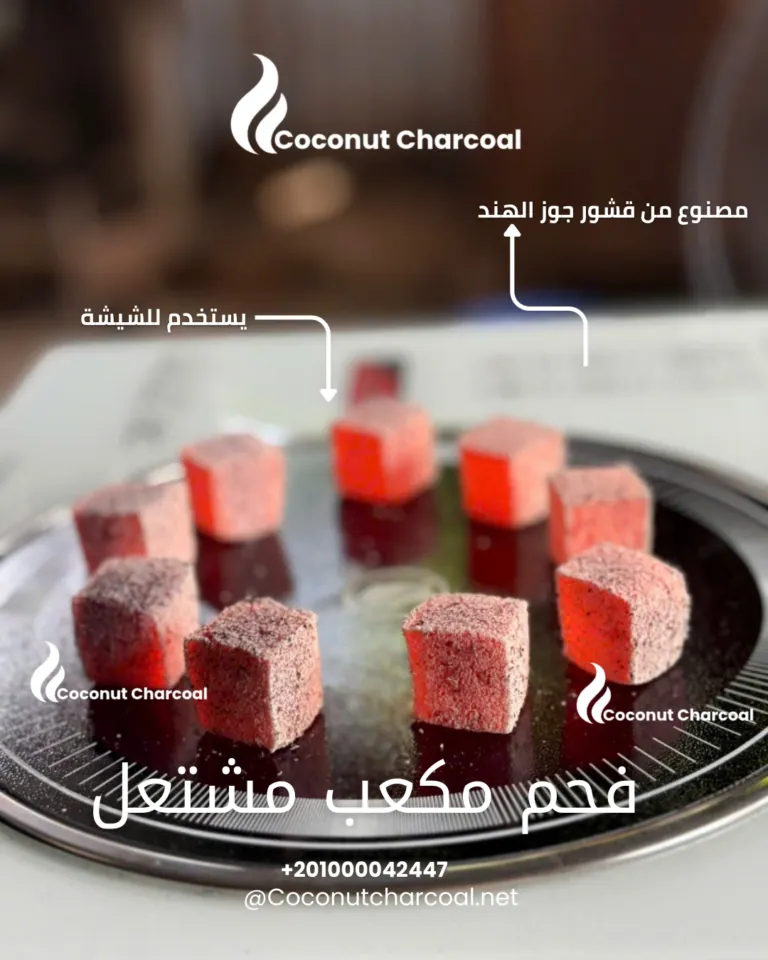
Coconut charcoal is made from ground coconut shells pressed into uniform shapes such as cubes, hexagons and fingers. Wood charcoal consists of carbonized wood pieces of irregular size and shape. Quick-light charcoal comes as compressed discs with added ignition agents, so it catches with a lighter in seconds.
Comparison table
| Parameter | Coconut charcoal | Wood charcoal | Quick-light |
|---|---|---|---|
| Shape | Uniform, consistent size | Irregular pieces | Uniform discs |
| Lighting | On a stove or heater, about 10 minutes | On a stove; may throw sparks | With a lighter in seconds |
| Smell | Odorless once fully lit | May smoke at first | May leave a smell or taste |
| Ash | Low: 1.6% to 3% in our products | Usually more, and varies from piece to piece | Varies by product |
| Burn time | 60 minutes to 2.5 hours | Varies by piece | Usually shorter |
The coconut charcoal figures in the table are the specifications of our three grades and vary by grade and size.
Why do hookah smokers prefer coconut charcoal?
Because it delivers steady heat for a long time without changing the taste of the shisha tobacco, and its ash is low and usually white, so smokers don't need to clean the bowl as often. Uniform pieces also make heat management easier, because every piece behaves like the next.
- Steady heat: fixed carbon in our products ranges from 75% to 80%, depending on the grade.
- No smell: once fully lit, it adds no odor to the tobacco.
- Less ash: from 1.6% in the Platinum grade to 3% in Premium.
What does this mean for importers and distributors?
A consistent product is easier to sell and generates fewer complaints. When the specifications are in writing, you know what you will receive in every container and can promise your customers the same experience every time. Uniform shapes are also packed with a known number of pieces per box, so you can present your product professionally under your own brand.
When should you sell the other types?
Quick-light charcoal suits occasional smokers who don't own a stove – for trips or outdoor gatherings, for example. Wood charcoal still has buyers in some markets because of its price or simple habit. But regular hookah smokers, along with cafés and restaurants, usually turn to coconut charcoal.
The bottom line
If your customers want a clean session, a pure taste and a long burn time, coconut charcoal is the choice. Start by finding the right quality grade for your market, then pick a shape on our products page.
Frequently asked questions
Why is coconut charcoal more expensive than wood charcoal?
Its raw material and manufacturing (grinding, pressing, drying) cost more, but it lasts longer so less charcoal is used per session.
Does quick-light charcoal change the taste of shisha?
Many smokers notice it because of the additives that speed up lighting, especially if it is not fully lit.
How do I light coconut charcoal?
On an electric burner or gas flame, turning it until it glows on all sides. See our lighting guide.
Further reading: