










1. Raw material: ground coconut shells
It all starts with ground coconut shell powder, the only raw material for every charcoal shape we produce. Raw material quality is the foundation, because it determines the ash content and fixed carbon of the finished product.
2. Pressing and shaping
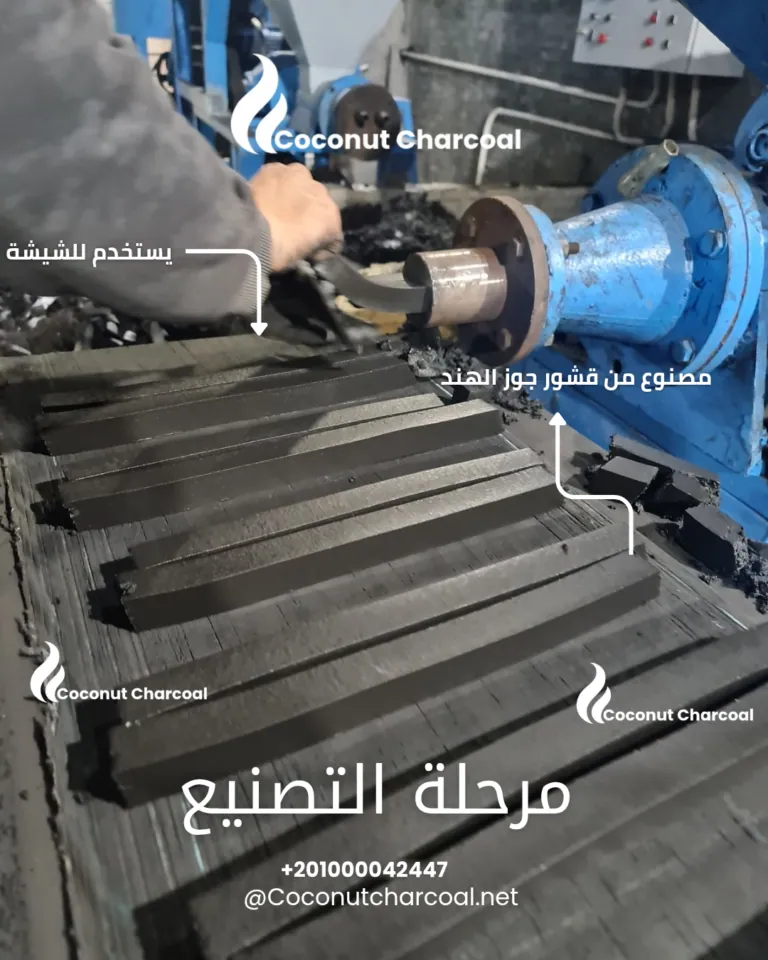
The material is pressed and shaped on the production lines into compact pieces. The force and consistency of pressing determine how hard each piece is – which is exactly what we later measure in the drop test.
3. Cutting to shape and size
The pieces are cut to the required shape and size: cube, hexagonal, dome, cube with hole or cylindrical finger. Consistent sizing means every piece burns like the next and the piece count per box stays constant.
4. Inspection and conformity with specifications
We monitor the specifications to match the required quality grade: ash content, moisture, burn time and piece strength. In the drop test, we drop 10 pieces from a height of one meter and count how many stay intact. The factory operates under an ISO 9001 quality management system.
5. Packing
The pieces are packed in 1 kg, 500 g or 250 g boxes under the customer's brand, or in bulk, inside export cartons. Read our private label packaging guide.
6. Loading and shipping
The cartons are loaded into 20 ft or 40 ft containers and shipped from the port best suited to the destination: Damietta, Port Said, Alexandria or Ain Sokhna. The factory's capacity is 100 tons per month.
See the stages for yourself
You can view photos of each stage in our photo gallery, or visit the factory in New Damietta from Saturday to Thursday. Details on our factory page.
Where is quality controlled at each stage?
- Raw material: cleaning shells and sieving the powder reduce impurities that turn into ash.
- Mixing and pressing: binder ratio and consistent pressing pressure set piece strength and burn time.
- Cutting: accurate size ensures a consistent piece count per box and a uniform look.
- Drying: sets final moisture and lighting speed, and is a condition for shipping safety.
- Inspection: drop, lighting and ash tests on samples from each batch.
- Packing: well-sealed boxes protect charcoal from moisture in shipping and storage.
These points are what separate one grade from another. See coconut charcoal grades compared.
Frequently asked questions
What is compressed hookah charcoal made of?
Carbonised, ground coconut shells mixed with a binder, then pressed, cut and dried.
Why does drying before packing matter?
It sets final moisture and lighting speed, and is a condition for shipping safety, because charcoal packed before it stabilises can self-heat.
Can I see production myself?
Yes, the factory welcomes visitors Saturday to Thursday, 9 am to 6 pm.
Further reading: